
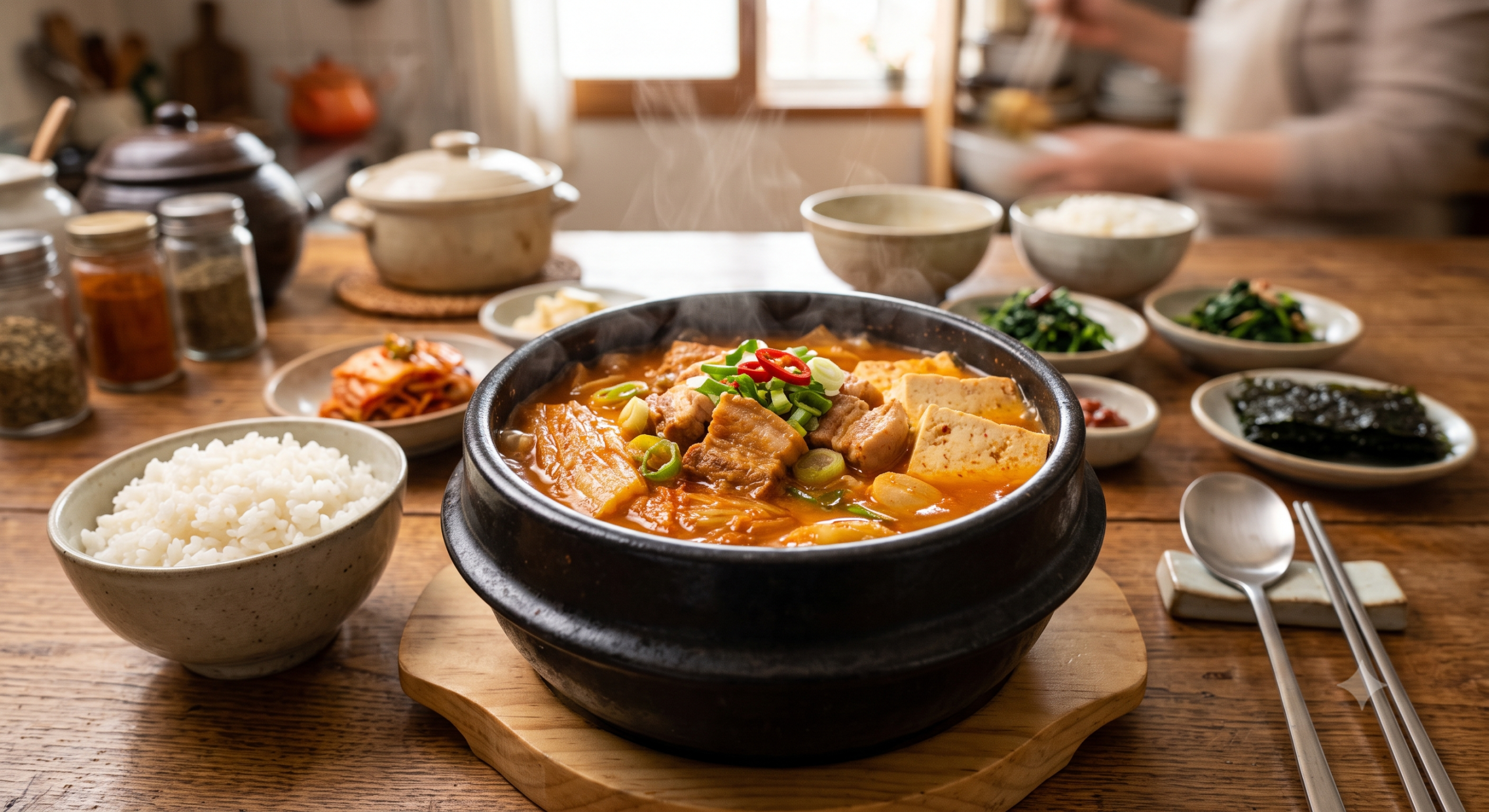
Authentic Korean Kimchi Jjigae: Easy Pork and Tofu Stew Recipe
What is Kimchi Jjigae and Why is it Korea’s Ultimate Soul Food?
Kimchi Jjigae is South Korea’s most iconic home-cooked comfort stew, made by simmering well-aged fermented kimchi with tender pork, soft tofu, and aromatics. It balances rich, savory pork fats with the fiery, tangy brightness of sour kimchi broth. Served bubbling hot in a clay pot alongside a warm bowl of white rice, it is the quintessential everyday dish found on Korean dining tables.
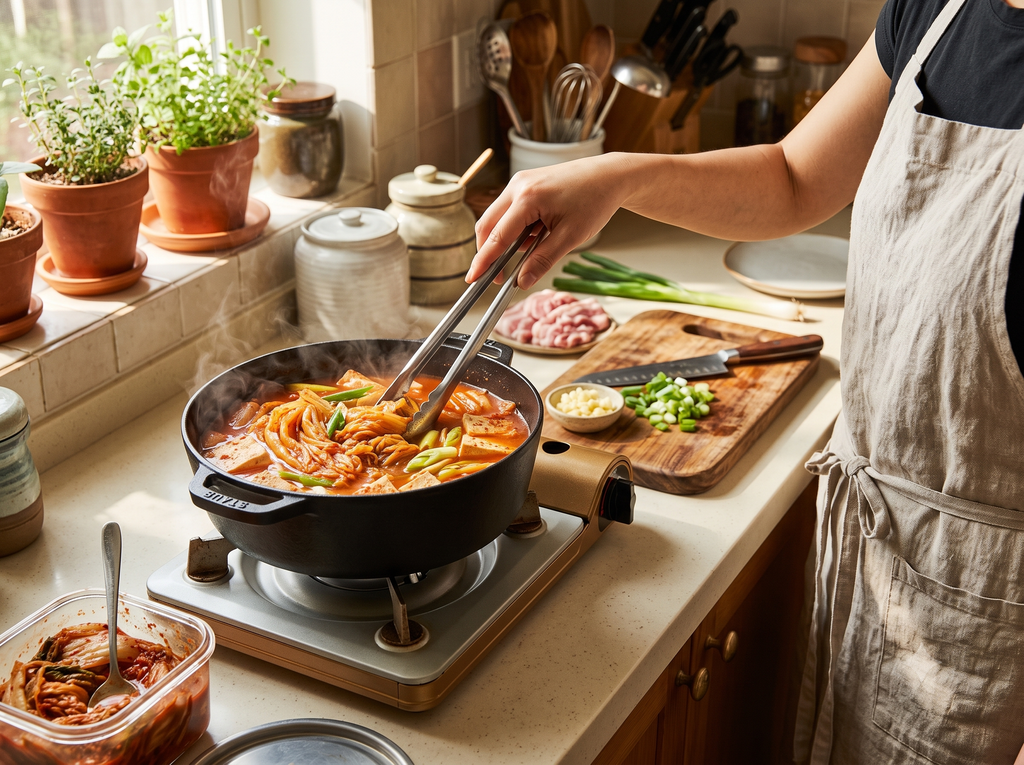
What Ingredients Do You Need for Authentic Kimchi Jjigae?
Main Ingredients (Serves 4):
- Well-Aged Sour Kimchi: 600g (approx. 1/4 head of Napa cabbage kimchi)
- Pork (Pork Belly, Shoulder, or Neck): 300g (approx. 0.66 lbs)
- Medium-Firm Tofu: 150g (approx. 1/2 block)
- Kimchi Brine (Kimchi Juice): 100 ml (approx. 0.4 cup)
- Scallion (Green Onion): 1 large stalk
- Yellow Onion: 1 medium
- Water: 1 Liter (approx. 4.2 cups)
- Cooking Oil: 1 tbsp (for searing the pork)
Stew Seasonings:
- Regular Soy Sauce (or Jin Ganjang): 2 tbsp
- Salted Fermented Shrimp (Saeu-jeot): 1 tbsp
- Minced Garlic: 1 tbsp
- Sugar: 1 tbsp
- White Vinegar: 1 tbsp
- Fine Salt: 1 tsp
- Korean Red Pepper Flakes (Gochugaru): 1 to 2 tbsp (adjust for desired heat level)
Easy Ingredient Substitutions Shoppers
| Original Ingredient | North American Grocery Alternative | Where to Find & Notes |
| Saeu-jeot (Salted Shrimp) | Fish sauce (Red Boat, Three Crabs) or anchovy sauce | Asian aisle at Walmart, Target, or standard supermarkets. Use 1 tbsp. |
| Well-Aged Sour Kimchi | Store-bought Napa cabbage kimchi left at room temperature for 1–2 days | Refrigerated produce section. Fermenting on the counter develops essential acidity. |
| Pork Belly / Neck | Boneless pork shoulder, pork butt, or thick-cut bacon strips | Standard meat department. Cut into bite-sized 1-inch chunks. |
| Gochugaru (Korean Chili Flakes) | Crushed red pepper flakes (pulsed fine) or mild chili powder | Standard spice aisle. Provides gentle heat and vibrant red color. |
How Do You Cook Kimchi Jjigae Step-by-Step?
Step 1: Prep the Ingredients
Slice the sour kimchi, green onion, and yellow onion into bite-sized pieces. Cut the half block of tofu into 0.5-inch thick rectangular slabs.
Step 2: Sear the Pork and Neutralize Odors
Heat a large pot over medium heat and swirl in 1 tablespoon of cooking oil. Add the pork and sauté until it is about halfway cooked. Add 1 tablespoon of minced garlic and stir-fry for 1 minute until fragrant. Pour in 2 tablespoons of soy sauce and 1 tablespoon of salted fermented shrimp (saeu-jeot), letting them bubble together with the meat for 1 full minute to infuse deep savory flavor and eliminate any pork gaminess.
Step 3: Add Chili Flakes and Bring to a Boil
Turn off the heat briefly and stir in 1 to 2 tablespoons of Gochugaru, coating the pork evenly without scorching the chili powder. Turn the stove back on, pour in 1 Liter of water, and bring the liquid to a rolling boil over medium-high heat.
Step 4: Add Vegetables, Kimchi Brine, and Simmer
Once boiling, add the chopped green onion, onion, kimchi brine, sugar, salt, and vinegar. Reduce the heat to medium-low, gently nestle the tofu slabs on top, and simmer uncovered for about 20 minutes to allow the broth to thicken and the pork to turn melt-in-your-mouth tender.
Pro Tips from Experience
- The Soy Sauce and Saeu-jeot Sear: Sizzling the soy sauce and salted shrimp directly with the half-cooked pork before adding water caramelizes the proteins and locks in umami. This step completely eliminates pork odors without needing a pre-boiled bone broth.
- Cut the Heat Before Adding Gochugaru: Korean red pepper flakes have high sugar content and burn rapidly in hot oil, turning bitter. Cutting the flame momentarily while stirring the pepper flakes creates a clean, vibrant chili oil base safely.
- The Sugar-Vinegar Secret for Depth: If your store-bought kimchi is not sour enough, 1 tablespoon of vinegar mimics the deep lactic tang of traditional fermented crock-pot kimchi. Conversely, the 1 tablespoon of sugar mellows the sharp acidity and ties the salty pork fats into a balanced broth.
- The 20-Minute Simmer Rule: Unlike quick noodle soups, authentic Kimchi Jjigae needs at least 20 minutes of steady simmering. This breaks down the tough cabbage ribs until they are silky and infuses the kimchi juice completely into the pork fat.
How to Store & Reheat Kimchi Jjigae
- Flavor Evolution: Kimchi jjigae tastes noticeably richer the next day as the aged kimchi and pork flavors meld into the broth. Cool completely and refrigerate in an airtight glass container for up to 4 to 5 days.
- Freezing: You can freeze Kimchi Jjigae for up to 2 months. If possible, omit or remove the tofu before freezing, as frozen tofu takes on a sponge-like, chewy texture.
- Reheating Method: Bring to a boil in a soup pot over medium heat. If the broth has reduced and thickened too much, add a splash of anchovy broth or water. Toss in fresh scallions or freshly sliced tofu right at the end to refresh the stew.
★If you need a side dish to go with it, check out my simple Gajijeon Recipe as well!
★Craving sweet and savory bulgogi? Click this Real Korean Bulgogi recipe!
★Craving a clean yet deeply rich Korean broth? Click this Tteok Mandu Guk recipe!
★How about Doenjang Jjigae for dinner?
★I strongly recommend a side dish, Korean Omelette(Gyeran-mari)!
5 thoughts on “Kimchi Jjigae Recipe”