
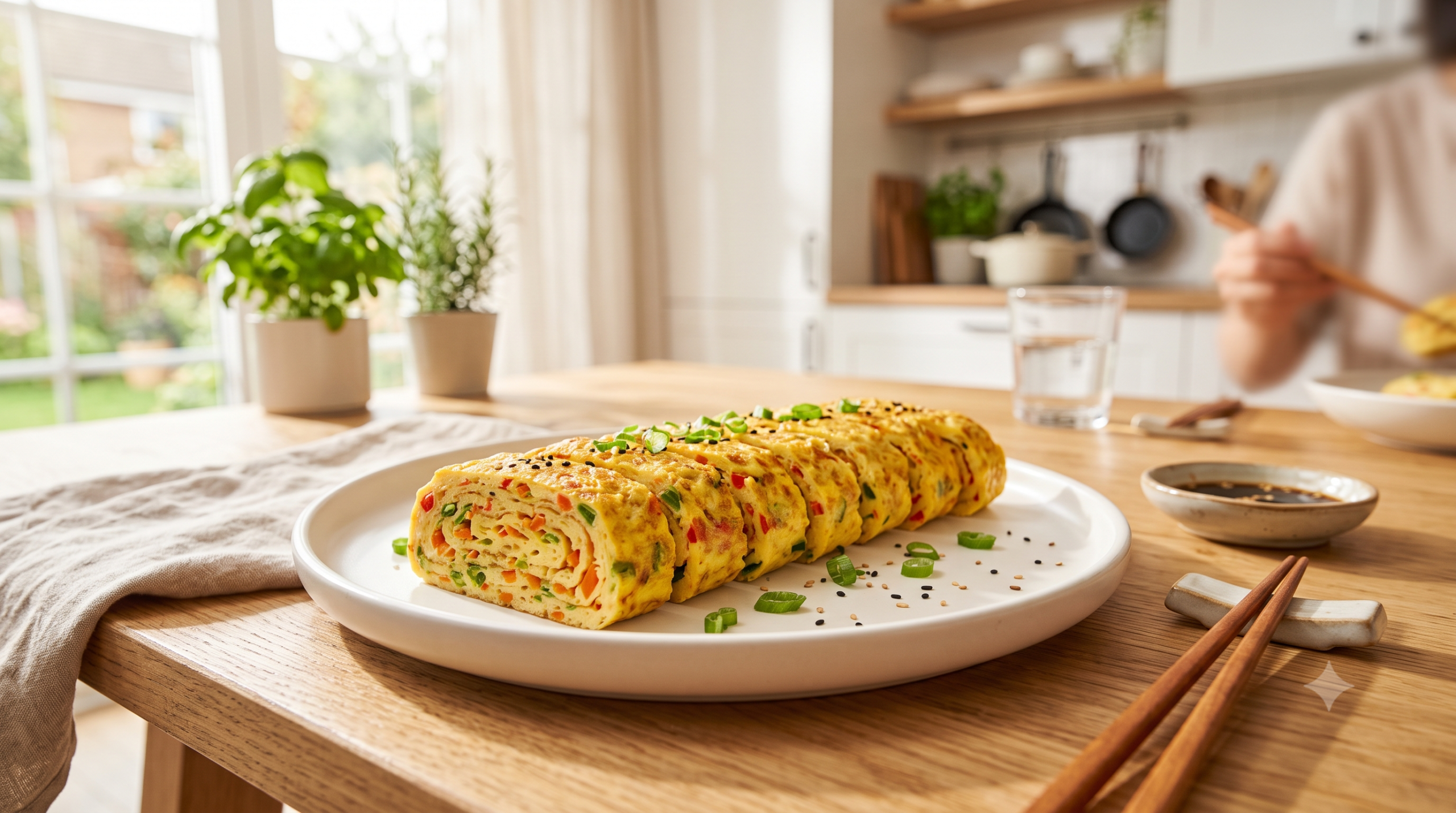
Classic Korean Rolled Omelette (Gyeran-mari): Easy Golden Egg Roll Recipe
What is Korean Gyeran-mari and Why is it the Ultimate Lunchbox Staple?
Gyeran-mari is a traditional Korean savory rolled omelette made by folding layers of seasoned beaten eggs into a neat, sliceable golden roll. In Korean home cooking, it is the quintessential everyday side dish (banchan) packed into school lunchboxes and served alongside steaming rice. My daughter is head-over-heels in love with dipping her Gyeran-mari into ketchup—to the point where she dunks it so heavily that I sometimes catch myself wondering whether she genuinely loves the egg roll itself or is just using it as an excuse to eat ketchup!
What Ingredients Do You Need for Classic Korean Gyeran-mari?
Main Ingredients (Serves 4):
- Large Eggs: 6
- Carrot: 2 to 3 tbsp (very finely minced)
- Scallion (Green Onion): 2 to 3 tbsp (very finely minced)
- Cooking Oil: 1 to 2 tbsp (for coating and greasing the pan)
Seasoning & Dip:
- Fine Salt: 3 pinches (keep it light if serving with ketchup; increase to 6 pinches if serving plain without sauce)
- Tomato Ketchup: Generous serving for dipping on the side
Easy Ingredient Substitutions for Shoppers
| Original Ingredient | North American Grocery Alternative | Where to Find & Notes |
| Korean Green Onions | Chives, scallions, or leek greens | Standard produce section at Walmart, Kroger, or Trader Joe’s. Mince as finely as possible. |
| Carrot (for crunch & color) | Finely minced red bell pepper or sweet corn kernels | Standard produce aisle. Ensure vegetables are finely diced so the egg sheet does not tear. |
| Cooking Oil | Neutral vegetable oil, canola oil, or avocado oil | Standard cooking oil aisle. Avoid pungent extra-virgin olive oil to keep the egg aroma clean. |
| Tomato Ketchup | Classic Heinz ketchup, spicy sriracha ketchup, or Japanese Kewpie mayo | Condiment aisle in any grocery store. |
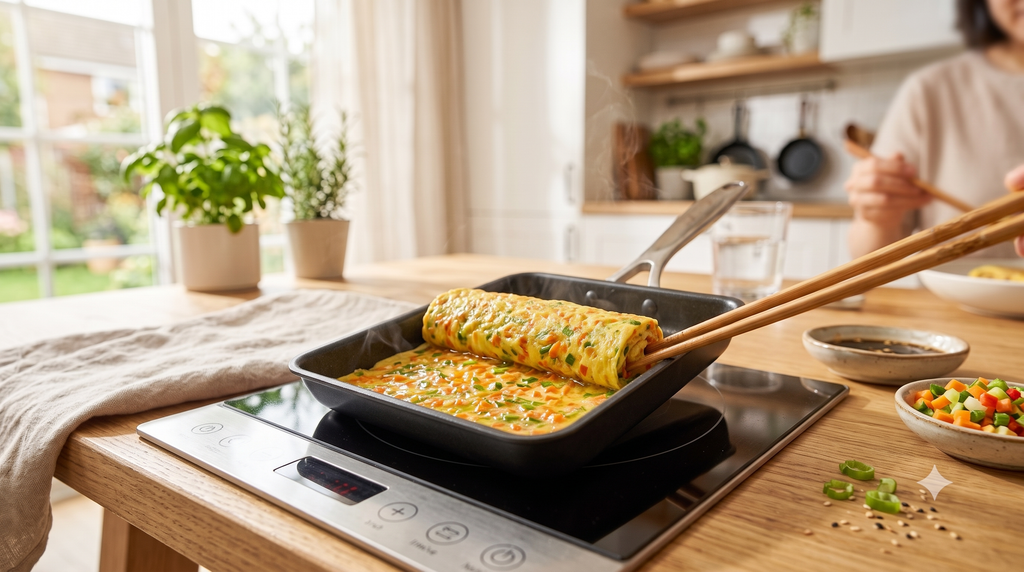
How Do You Cook Korean Rolled Omelette Step-by-Step?
Step 1: Whisk the Egg Base
Crack the 6 eggs into a large mixing bowl and whisk thoroughly until the whites and yolks are fully blended and smooth. Add the finely minced carrots, chopped green onions, and 3 pinches of fine salt, stirring gently to evenly disperse the vegetables throughout the liquid.
Step 2: Preheat and Pour the First Layer
Add a generous swirl of cooking oil to a non-stick skillet (a rectangular tamagoyaki pan or standard 8-to-10-inch round pan works great) and let it preheat over medium-low heat for 1 to 2 minutes. Pour in just enough of the egg mixture to create a thin, even layer across the bottom of the pan.
Step 3: Roll and Build the “Egg Brick”
When the bottom is lightly set but the surface is still moist and slightly glossy, use a spatula to roll the egg over itself in tight folds toward one side of the pan to create the initial compact “brick” core. Push the rolled egg to the edge, grease the open pan surface lightly if dry, and pour another thin ladle of raw egg mixture into the empty space, making sure it connects directly with the edge of the roll.
Step 4: Continue Rolling and Rest Before Slicing
As each new layer sets, continue rolling the enlarged egg brick over the fresh layer so it steadily grows thicker and wider. Gently roll the block onto all four flat sides over low heat to ensure the inside is fully cooked through and the outside turns a light golden yellow. Transfer the cooked roll to a cutting board and let it rest undisturbed for 5 minutes. Slice into clean, uniform 0.5-inch thick slices with a sharp knife and serve warm with plenty of ketchup.
Pro Tips from Experience
- The 5-Minute Cutting Board Rest: Never attempt to slice Gyeran-mari the second it leaves the hot skillet. Resting the hot egg roll on a cutting board for 5 minutes allows the internal residual steam to set the protein layers firmly, guaranteeing neat, clean slices that do not crumble apart when sliced.
- Mince Your Vegetables Extra Fine: If carrots or green onions are diced too thickly, their sharp edges will puncture the delicate egg sheet as you fold it, causing tears and liquid leaks. Keeping your knife cuts as fine as confetti ensures a flexible, silky roll every time.
- Control Your Heat with Low-Flame Patience: Cooking eggs over high heat causes air pockets and deep browning, which prevents the layers from sticking to each other. Keeping the flame strictly on medium-low allows the raw egg to fuse seamlessly to the previous roll, creating a solid, restaurant-style cross section.
- Adjust Salt According to the Ketchup Dip: Because tomato ketchup is naturally concentrated with salt, sugar, and vinegar, keeping the egg seasoning to just 3 pinches creates a balanced, kid-friendly flavor profile. If you plan to serve it plain as a savory adult drinking snack (anju), bump the salt up to 6 pinches.
How to Store & Reheat Korean Rolled Omelette
- Refrigeration: Store completely cooled egg slices in an airtight container layered with clean parchment paper. Keeps well in the fridge for up to 3 days.
- Gentle Warming: Overheating eggs causes the proteins to tighten and turn rubbery. To reheat, warm the slices gently in an ungreased non-stick skillet over low heat for 1 minute on each side, or microwave on 50% power for 20 to 30 seconds. Gyeran mari also tastes delicious cold or packed directly into lunch boxes (dosirak).
★ Gyeran-mari goes really well with Kimchi Jjigae!
★Do you need 10-Minute Egg Fried Rice Recipe?
2 thoughts on “Korean Omelette(Gyeran-mari)”