
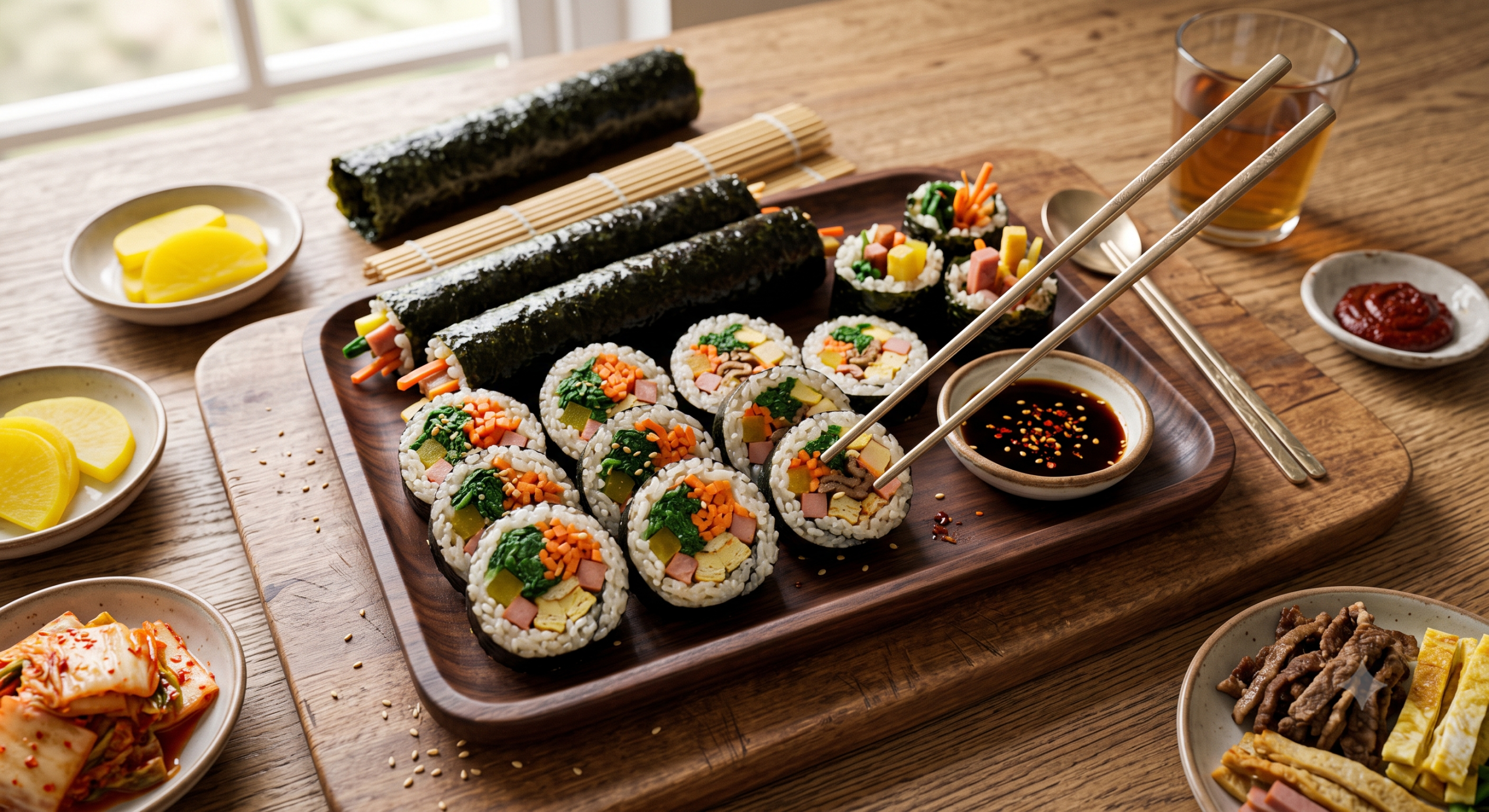
Classic Homemade Korean Gimbap: Easy Step-by-Step Seaweed Rice Rolls
What is Korean Gimbap and How Does It Differ from Japanese Sushi?
Gimbap is a beloved Korean roll made of steamed white rice seasoned with toasted sesame oil and salt, wrapped in roasted seaweed with cooked vegetables, eggs, and proteins. Unlike Japanese sushi, which emphasizes raw fish and vinegared sushi rice, Korean Gimbap is entirely cooked, rich in savory-nutty aromas, and served as the ultimate picnic, road trip, and lunchbox staple.
What Ingredients Do You Need to Make 5 Rolls of Classic Gimbap?
Main Ingredients (Makes 5 Full Rolls):
- Cooked Short-Grain Rice: 5 fistfuls (approx. 4 to 5 cups cooked, warm)
- Gimbap Seaweed Sheets (Gim): 5 full sheets
- Carrots: 2 medium
- Cucumbers: 2 medium (Korean, Persian, or English cucumbers)
- Kimbap Ham / Luncheon Meat: 1 pack (or 1 can of Spam cut lengthwise)
- Eggs: 2 to 3 large (beaten)
- Yellow Pickled Radish (Danmuji): 1 pack (optional, or swap with Spam/ham combo)
- Cooking Oil: 1 to 2 tbsp (for pan-frying)
Rice & Vegetable Seasonings:
- Toasted Sesame Oil: 5 tbsp (divided for rice, rolling, and blade coating)
- Fine Salt: 2 tbsp total (divided: 1 tbsp for rice, 4 pinches for veggies)
- Granulated Sugar: 1 tbsp (for cucumber quick-pickle)
- White Vinegar: 1 tbsp (for cucumber quick-pickle)
Easy Ingredient Substitutions for Shoppers
| Original Ingredient | North American Grocery Alternative | Where to Find & Notes |
| Gimbap Gim (Seaweed) | Japanese Nori Sheets (Full-size, unflavored) | Available in the Asian aisle of Walmart, Target, Kroger, or Costco. |
| Korean Kimbap Ham | Classic Canned Spam, Thick-Cut Bacon, or Turkey Hot Dogs | Available at any standard grocery store. Slice Spam into long matchsticks. |
| Korean/Persian Cucumber | English (Hothouse) Seedless Cucumber | Standard produce section. Scoop out watery center seeds before slicing. |
| Yellow Pickled Radish (Danmuji) | Sweet dill pickle spears (drained and rinsed) or extra Spam strips | Standard pickle aisle. Lightly blot pickles with paper towels to avoid sogginess. |
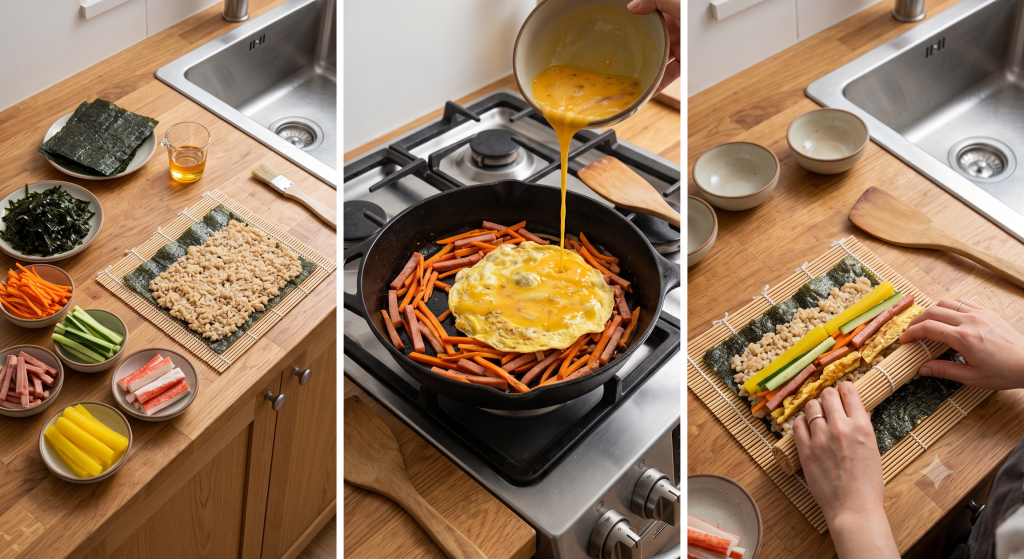
How Do You Prepare and Roll Gimbap Step-by-Step?
Step 1: Season the Rice Base
Place the freshly cooked, warm rice into a large mixing bowl. Add 1 tablespoon of fine salt and a generous splash of toasted sesame oil (approx. 1 to 2 tablespoons). Gently fold with a rice paddle to evenly distribute the aroma without crushing the grains, then let it cool to room temperature.
Step 2: Prep and Quick-Pickle the Vegetables
Rinse and drain the yello radish, carrots and cucumbers thoroughly. Julienne both into thin, uniform strips. Place the shredded cucumber into a small bowl, toss with 1 tablespoon of sugar and 1 tablespoon of vinegar, and let sit for 10 minutes. Squeeze out all excess moisture firmly with your hands and season with two pinches of salt.
Step 3: Sauté Carrots, Ham, and Egg Ribbon
Heat a lightly oiled skillet over medium heat. Sauté the julienned carrots with two pinches of salt until tender-crisp. Add the ham strips and sear until golden brown. Pour the beaten eggs directly over the sizzling ham in the pan to form a cohesive, savory egg-and-ham flat layer. Once set, flip, remove from heat, and slice lengthwise into long strips.
Step 4: Assemble and Roll Tight
Place a seaweed sheet on your cutting board or bamboo mat with the rough, textured side facing up. Evenly spread one fistful of seasoned rice across the bottom two-thirds of the sheet. Arrange your carrots, squeezed cucumber, and ham-egg strips neatly across the center of the rice. Lift the bottom edge of the seaweed, fold it firmly over the filling, and roll forward while applying even pressure to create a tight, compact cylinder.
Pro Tips from Experience
The Rough Seaweed Surface Rule: Always ensure the rough, textured side of the seaweed sheet faces upward before spreading your rice. The rough texture grips the rice grains securely, preventing the roll from unraveling when sliced.
- The Squeeze-and-Drain Moisture Fix: Cucumbers release significant moisture after slicing, which is the number one reason homemade Gimbap turns soggy. Squeezing the marinated cucumber completely dry with paper towels ensures a crunchy texture that keeps your roll intact for hours.
- Sesame Oil Blade Trick for Clean Slices: Gimbap rice is naturally sticky. Brush a light sheen of toasted sesame oil along the exterior of the finished roll, and wipe your chef’s knife blade with sesame oil (or a damp paper towel) before slicing. Cut in a smooth, gentle sawing motion rather than pressing straight down to keep every slice perfectly round.
How to Store & Reheat Gimbap
- Storage Reality: Fresh gimbap is best enjoyed within a few hours at room temperature. If refrigerated, wrap tightly in aluminum foil or place in an airtight container; consume within 24 to 36 hours before the rice hardens significantly.
- Never Freeze: Freezing whole gimbap ruins the crisp texture of fresh vegetables like cucumbers, pickled radish, and carrots.
- The Pan-Fried Egg Trick (Gimbap Jeon): Cold gimbap becomes unpleasantly stiff in the fridge. Instead of microwaving—which dries out the seaweed—dip each sliced roll into a bowl of lightly beaten egg and pan-fry in a lightly oiled skillet over medium-low heat for 1–2 minutes per side. The exterior turns golden and fragrant while the rice core becomes piping hot and tender again.
★ If you need another really-quick Gimbap recipe, check out my Three Ingredients Gimbap as well.
★ If you need tteokbokki to pair with it, check out Authentic Tteokbokki Recipe as well.
1 thought on “Ultra-Fast Gimbap”