
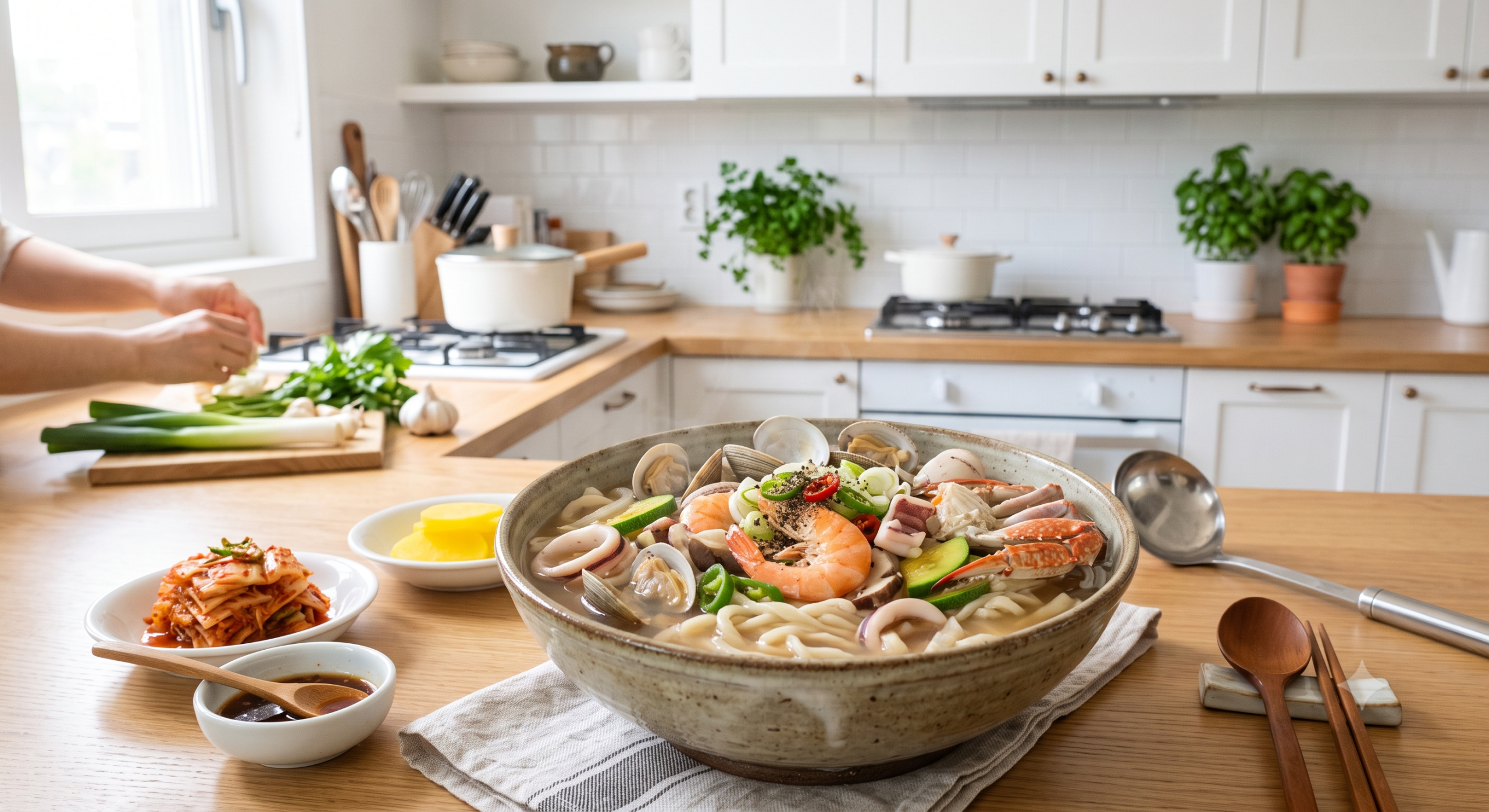
Authentic Korean Seafood Noodle Soup (Haemul Kalguksu): Easy Family-Favorite Recipe
What is Korean Haemul Kalguksu and Why Do Families Love It?
Haemul Kalguksu is a classic Korean comfort soup featuring knife-cut wheat noodles simmered directly in a deeply savory, ocean-fresh seafood and vegetable broth. My children absolutely love noodles—there is something so fun and joyful for them about blowing gently on the steaming ribbons and slurping them up. Whenever I toss a generous handful of seafood into the pot, that naturally rich, briny sweetness infuses every drop of broth, and the kids shout “Delicious!” after every single bite.
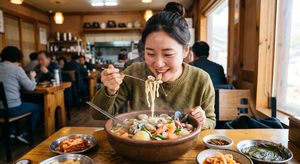
What Ingredients Do You Need for Seafood Kalguksu?
Main Ingredients (Serves 4):
- Fresh or Dried Noodles: 4 servings (approx. 400g to 500g)
- Frozen Shrimp: Desired amount (peeled or tail-on, thawed and rinsed)
- Frozen Clam Meat (Optional): Desired amount (adds an extra layer of briny depth)
- Korean Zucchini (Aehobak): 1/2 medium
- Yellow Onion: 1 medium
- Scallion (Green Onion): 1 large stalk
- Carrot: A small piece (approx. 1/4 carrot for color)
- Water: 1.5 Liters (approx. 6.3 cups)
Clear Broth Seasonings:
- Korean Soup Soy Sauce (Guk-ganjang): 1 tbsp
- Anchovy Fish Sauce (Myeolchi-aekjeot): 1 tbsp (the savory sea-salt booster)
- Minced Garlic: 1 tbsp
- Fine Salt: To taste (adjust after simmering)
- Black Pepper: A light pinch to finish
Easy Ingredient Substitutions for Shoppers
| Original Ingredient | North American Grocery Alternative | Where to Find & Notes |
| Korean Fresh Kalguksu Noodles | Fresh Japanese Udon (flat/medium), Chinese wide hand-pulled noodles, or dried fettuccine | Asian aisle or pasta section at Walmart, Kroger, or Whole Foods. |
| Korean Soup Soy Sauce (Guk-ganjang) | Light soy sauce mixed with a pinch of sea salt | Asian aisle. Regular dark soy sauce will darken the clear broth excessively. |
| Anchovy Fish Sauce (Myeolchi-aekjeot) | Standard fish sauce (Red Boat, Three Crabs) or oyster sauce (0.5 tbsp) | International or Asian aisle at any local supermarket. |
| Korean Zucchini (Aehobak) | Standard green zucchini or yellow squash | Standard produce section. Slice into matchsticks so it softens quickly. |
How Do You Cook Seafood Kalguksu Step-by-Step?
Step 1: Prep the Seafood and Vegetables
Rinse the frozen shrimp (and clam meat, if using) under cold running water to remove surface ice glaze, then drain thoroughly. Thinly julienne the zucchini, yellow onion, green onion, and carrot into uniform matchsticks so they cook evenly with the noodles.
Step 2: Build the Seasoned Broth Base
Pour 1.5 Liters of water into a large, deep soup pot. Stir in 1 tablespoon of soup soy sauce, 1 tablespoon of anchovy fish sauce, and 1 tablespoon of minced garlic. Bring the liquid to a rolling boil over high heat, take a quick sip to check the salinity, and add a small pinch of fine salt if you prefer a sharper savory base.
Step 3: Simmer Vegetables and Seafood
Once boiling rapidly, add the sliced zucchini, onion, scallions, and carrots, cooking for about 3 minutes until tender. Add the drained frozen shrimp and clam meat into the bubbling broth and simmer for 5 minutes so the seafood releases its natural sweetness without turning tough.
Step 4: Cook the Noodles and Finish
Add the knife-cut noodles directly into the boiling soup, stirring gently with chopsticks to separate the strands. Boil for 6 to 7 minutes until the noodles turn silky, tender, and chewy throughout. Turn off the heat, finish with a generous shake of black pepper, and ladle into wide bowls.
Pro Tips from Experience
- Shake Off Excess Noodle Starch: Fresh packaged Kalguksu noodles come heavily dusted in potato or wheat starch to keep the strands from sticking together. Gently shake or lightly tap the noodles over a sink before dropping them into the broth; this keeps the soup silky and clear rather than turning it into a heavy porridge.
- The Soup Soy Sauce & Fish Sauce Synergy: Pairing 1 tablespoon of Guk-ganjang with 1 tablespoon of anchovy fish sauce mimics hours of simmering whole dried kelp and anchovy stock. The fish sauce provides deep sea-salt savoriness, while the light soy sauce gives a subtle fermented backbone without masking the clean taste of the seafood.
- Keep Vegetables and Seafood Staggered: Boiling frozen shrimp for more than 10 minutes makes them rubbery and dry. Letting the vegetables soften first for 3 minutes before dropping in the seafood keeps the shrimp juicy and tender while infusing the soup base.
- Serve Immediately with Tangy Kimchi: Fresh wheat noodles absorb broth very quickly once cooked. Serve the soup steaming hot straight from the stove with a side of crisp, well-chilled Napa cabbage kimchi to cut through the piping-hot broth.
How to Store & Reheat Seafood Kalguksu
- Avoid Storing Cooked Noodles in Soup: Freshly rolled knife-cut wheat noodles absorb seafood broth rapidly. If you have leftover broth and seafood, strain out the cooked noodles or consume them right away.
- Broth Storage: The clear seafood broth can be chilled in an airtight container for up to 2 days or frozen for up to 1 month.
- Reheating & Reviving: Reheat the seafood broth to a vigorous rolling boil. Cook a fresh batch of raw kalguksu noodles separately in boiling water for 3 minutes, rinse off excess surface starch, and combine with the hot seafood soup to maintain clean, restaurant-quality flavors.
★How about Korean Braised chicken Dakbokkeumtang or Jjimdak for dinner?
★Korean Beef and Radish Soup(Sogogi Muguk) is really simple and savory!
1 thought on “Seafood Noodle”