
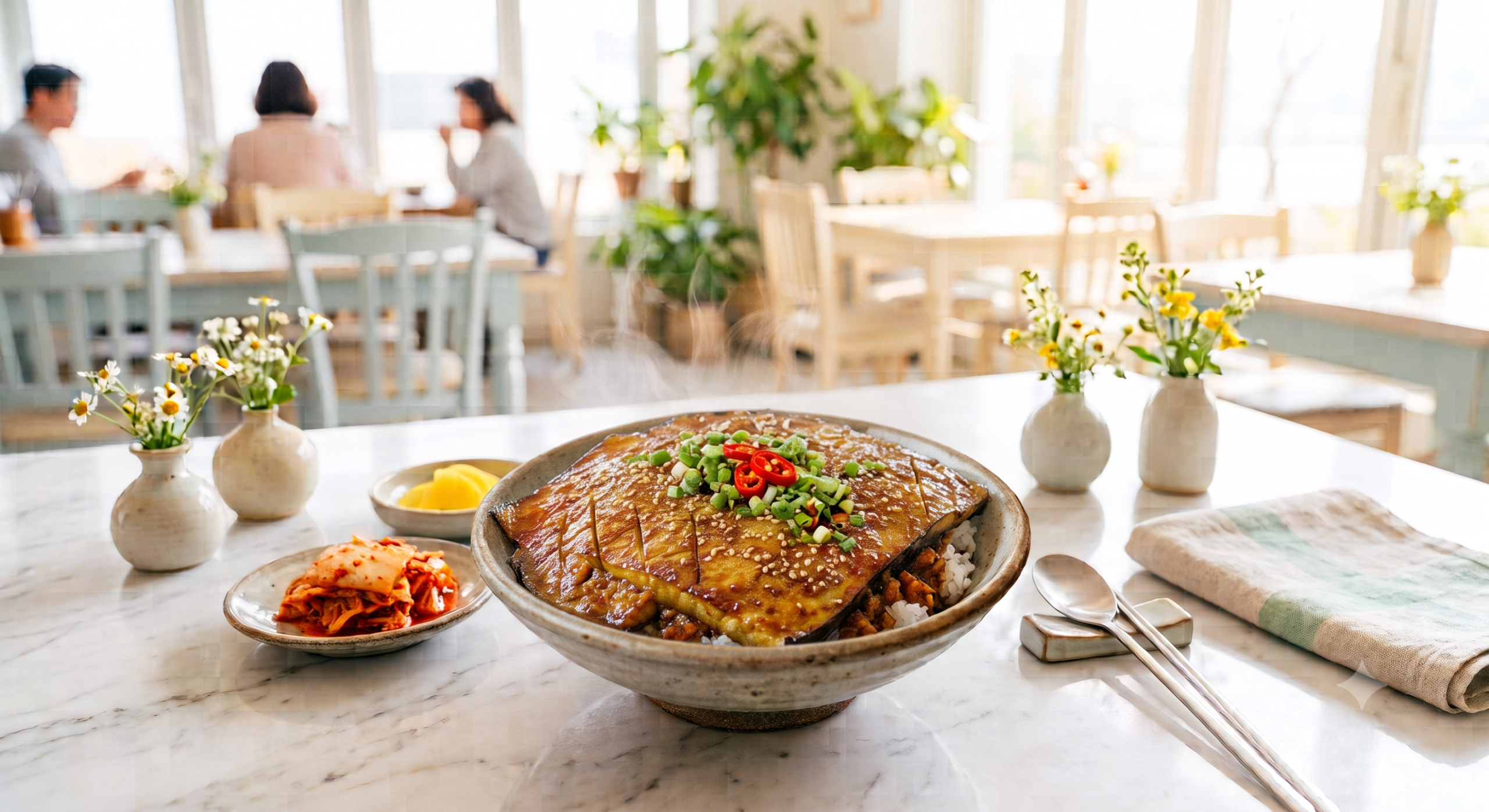
Authentic Korean Glazed Eggplant Rice Bowl (Gaji Deopbap): 15-Minute Budget Gourmet
What is Korean Gaji Deopbap and Why is it the Ultimate Budget Comfort Bowl?
Gaji Deopbap is a beloved Korean rice bowl topped with tender eggplant seared in green onion oil and braised in a savory-sweet, garlicky soy glaze. Whenever eggplants are in peak season and affordable, it is my go-to dish for putting together an effortless yet impressive meal. Just recently, I scored five fresh eggplants at our local produce stall for only 1,500 KRW (barely over a dollar!), and turned them into a deeply satisfying family feast. The melting, custardy eggplant absorbs every drop of the glossy glaze, making plain steamed rice taste extraordinary.
What Ingredients Do You Need for Korean Eggplant Rice Bowl?
Main Ingredients (Serves 4):
- Eggplants: 4 medium (slender Asian eggplants work best)
- Warm Steamed Rice: 4 bowls
- Scallion (Green Onion): 1/2 stalk (finely minced)
- Cooking Oil: 1.5 to 2 tbsp (for stir-frying green onions and searing eggplant)
Savory Umami Glaze:
- Soy Sauce: 2 tbsp
- Oyster Sauce: 2 tbsp
- Tuna Fish Sauce (Chamchi-aek): 2 tbsp (the secret savory backbone)
- Granulated Sugar: 2 tbsp
- Water: 12 tbsp (approx. 3/4 cup)
Easy Ingredient Substitutions for Shoppers
| Original Ingredient | North American Grocery Alternative | Where to Find & Notes |
| Korean/Asian Slender Eggplant | Japanese Eggplant, Chinese Eggplant, or small Italian Eggplant | Standard produce section at Walmart, Kroger, Trader Joe’s, or local Asian markets. Tender skin and low seed count are ideal. |
| Tuna Fish Sauce (Chamchi-aek) | Regular Asian fish sauce (Red Boat/Three Crabs), anchovy sauce, or extra oyster sauce | Asian foods aisle. Brings rich, smoky umami to the braising sauce. |
| Oyster Sauce | Vegetarian mushroom stir-fry sauce | Standard Asian aisle. Replicates the rich gloss and savory body. |
| Cooked Short-Grain Rice | Calrose medium-grain rice, Jasmine rice, or sushi rice | Grain aisle at any supermarket. |
How Do You Cook Korean Eggplant Rice Bowl Step-by-Step?
Step 1: Prep the Sauce & Aromatics
In a bowl, whisk together 2 tablespoons of soy sauce, 2 tablespoons of oyster sauce, 2 tablespoons of tuna sauce, 2 tablespoons of sugar, and 12 tablespoons of water until the sugar dissolves completely. Finely mince the green onion and set it aside.
Step 2: Microwave Par-Cook & Score the Eggplant
Wash the eggplants and slice each lengthwise down the center into two halves. Place the halved eggplants on a microwave-safe plate and microwave on high for 3 to 5 minutes until pliable and slightly softened. Once cool enough to handle, make shallow criss-cross or diagonal slits across the flesh side and press down gently to flatten them like cutlets.
Step 3: Sauté Green Onions & Pan-Sear Eggplant
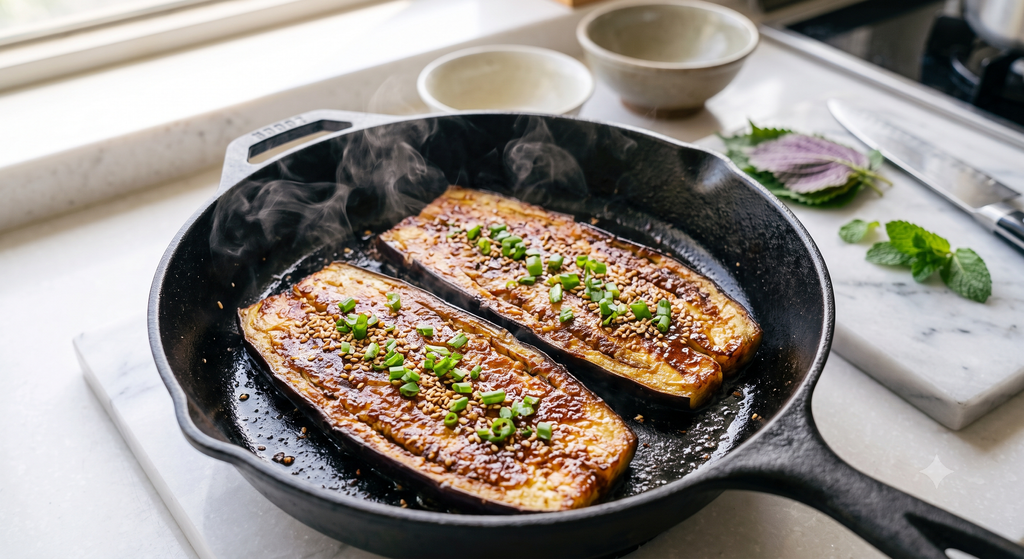
Heat 1.5 to 2 tablespoons of cooking oil in a wide skillet over medium heat. Add the minced green onions and sauté until aromatic and slightly golden. Lay the flattened eggplants cut-side down into the scallion oil, pan-searing until the surface turns richly golden-brown, then flip to sear the skin side.
Step 4: Braise with Sauce & Serve Over Rice
Pour the pre-mixed sauce directly over the golden seared eggplants in the hot pan. Simmer over medium-low heat for 2 to 3 minutes, spooning the bubbling glaze continuously over the eggplants until they turn glossy and tender. Spoon warm steamed rice into four deep bowls, crown each with the glazed eggplants, and drizzle the remaining pan sauce generously over top.
Pro Tips from Experience
- The 3-Minute Microwave Pre-Steam Trick: Raw eggplant acts like a dry sponge, soaking up massive amounts of cooking oil if placed directly into a dry skillet. Microwaving the halved eggplants for 3 to 5 minutes pre-cooks the interior cells with their own moisture, allowing you to sear them to a crisp golden finish using only a modest swirl of oil.
- Score and Flatten for Maximum Flavor Cling: Scoring shallow diamond cuts into the flesh and pressing the eggplants flat increases the surface area that touches the pan. This allows the caramelized green onion oil to sear the exterior and lets the soy-oyster sauce penetrate right through to the skin.
- Tuna Sauce Brings the Restaurant Depth: While soy sauce and sugar provide classic sweetness, 2 tablespoons of tuna fish sauce (Chamchi-aek) add an earthy, savory base note that cuts through any vegetable blandness, elevating budget eggplant into a restaurant-tier dish.
- Serve with a Fried Egg and Sesame Oil: For an easy upgrade, crown each bowl with a sunny-side-up egg and a drizzle of toasted sesame oil with toasted sesame seeds. The runny yolk mixing with the savory sweet glaze creates an irresistible sauce over the rice.
How to Store & Reheat Gaji Deopbap
- Separate Rice and Topping: Always store the stir-fried eggplant topping separately from the steamed rice in airtight containers. If stored together, the savory sauce will make the rice unpleasantly soggy and sticky. Refrigerate for up to 3 days.
- Reheating Instructions: Reheat the eggplant topping in a skillet over medium-low heat with a tiny splash of water to loosen the glossy garlic-soy glaze. Reheat the rice separately in the microwave covered with a damp paper towel. Spoon the warmed eggplant over the fresh rice and finish with a drizzle of toasted sesame oil.
★Do you want some crispy things? Find the Crispy Gajijeon Recipe here!
2 thoughts on “Korean Gaji Deopbap”