
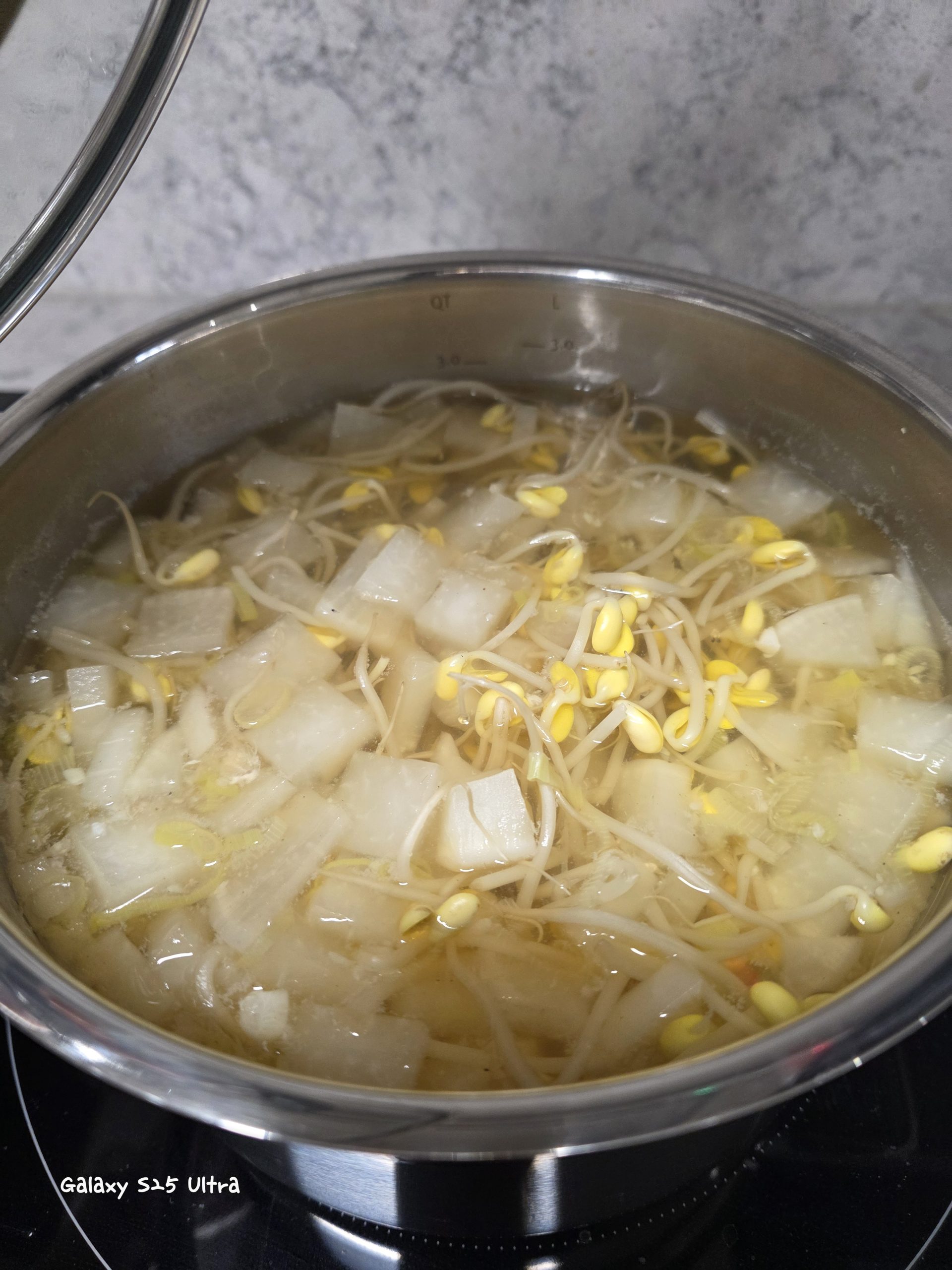
Authentic Korean Soybean Sprout and Radish Soup (Kongnamul Muguk): The Ultimate Hangover Remedy
What is Kongnamul Muguk and Why is it Korea’s Go-To Hangover Soup?
Kongnamul Muguk is a clear, comforting Korean soup made by simmering crisp soybean sprouts and sweet radish slices into a refreshing, delicate broth. In Korea, it is famous as the ultimate hangover remedy (haejangguk) because soybean sprouts are naturally rich in asparagine, an amino acid renowned for detoxifying alcohol and soothing unsettled stomachs. It is made from humble, everyday budget ingredients, yet spooning this clear soup over warm steamed rice with a slice of crisp kimchi makes an entire bowl vanish in no time.
What Ingredients Do You Need for Authentic Kongnamul Muguk?
Main Ingredients:
- Korean Soybean Sprouts (Kongnamul): 200g (approx. 7 oz, generously packed)
- Korean Radish (Mu): 200g (approx. 7 oz, sliced into bite-sized slabs)
- Water: 1 Liter (approx. 4.2 cups)
- Scallion (Green Onion): 1 tbsp (finely chopped)
Clear Broth Seasonings:
- Regular Soy Sauce (or Korean Soup Soy Sauce): 1 tbsp
- Tuna Fish Sauce (Chamchi-aek): 1 tbsp (the savory sea-salt booster)
- Minced Garlic: 1 tbsp
- Fine Salt: To taste (for fine-tuning the salinity)
Easy Ingredient Substitutions for Shoppers
| Original Ingredient | North American Grocery Alternative | Where to Find & Notes |
| Korean Soybean Sprouts (Kongnamul) | Mung bean sprouts or fresh pea shoots | Produce section at Walmart, Kroger, Trader Joe’s, or local Asian markets. Mung bean sprouts cook faster, so simmer them for just 3–4 minutes. |
| Korean Radish (Mu) | Japanese Daikon Radish or White Turnip | Standard produce department. Daikon has a comparable juicy sweetness and softens quickly. |
| Tuna Fish Sauce (Chamchi-aek) | Standard Asian fish sauce (Red Boat, Three Crabs) or anchovy sauce | Asian foods aisle at any major grocery store. Delivers clean, ocean-deep savoriness without fishy odors. |
| Korean Soup Soy Sauce (Guk-ganjang) | Light soy sauce mixed with a pinch of sea salt | Condiment aisle. Avoid heavy dark soy sauces, which darken the broth. |

How Do You Cook Kongnamul Muguk Step-by-Step?
Step 1: Wash and Prepare the Vegetables
Thoroughly rinse the soybean sprouts and radish under clean cold running water. Drain the sprouts in a colander, and slice the peeled radish into uniform, bite-sized flat rectangles (about 0.15 inches thick) so they become translucent evenly during boiling.
Step 2: Season the Boiling Water
Pour 1 Liter of water into a medium soup pot and bring it to a rolling boil over high heat. Once bubbles break the surface vigorously, stir in 1 tablespoon of soy sauce, 1 tablespoon of tuna fish sauce, and 1 tablespoon of minced garlic to build the aromatic broth foundation.
Step 3: Add Sprouts, Radish, and Adjust Seasoning
Add the rinsed soybean sprouts and radish slices directly into the boiling seasoned broth. Cook over medium-high heat for about 10 minutes. Take a small spoonful to taste-test the broth, then gradually add small pinches of fine salt until the salinity is balanced.
Step 4: Simmer to Translucence and Finish
Allow the soup to simmer gently for another 5 to 10 minutes until the radish slabs turn completely soft and glassy-translucent. Toss in the chopped green onions, let them bubble for 30 seconds to release their sweet aroma, and remove the pot from the stove.
Pro Tips from Experience
- The Generous Sprout-to-Radish Ratio: While restaurant versions often serve a thin broth with sparse vegetables, our family loves a generous portion of both sprouts and radish. Adding a full 200g of each allows their natural sweetness and savory vegetable sugars to infuse deeply into the water, eliminating the need for pre-boiled anchovy or kelp stock.
- Tuna Sauce Eliminates the “Raw Bean” Scent: When boiling soybean sprouts, under-seasoned water can sometimes leave a faint, grassy bean odor. Stirring in 1 tablespoon of tuna fish sauce (Chamchi-aek) with minced garlic into the boiling water neutralizes raw vegetal notes while providing a rich, savory body.
- Keep the Pot Completely Uncovered: The classic rule for cooking Korean soybean sprouts is either to keep the lid firmly closed the entire time or leave it completely off. Leaving the pot uncovered throughout cooking allows volatile vegetal sulfur compounds to evaporate freely into the air, guaranteeing a crystal-clear, clean-tasting broth.
- The Translucent Radish Marker: The easiest visual cue that your soup is ready is the appearance of the radish. When the stark white radish slabs turn glassy and translucent all the way to their centers, their natural sugars have fully dissolved into the soup, making them tender enough to melt on your tongue.
How to Store & Reheat Kongnamul Muguk
- Refrigeration: Let the soup cool completely and store in a glass or stainless-steel container for up to 3 days in the fridge.
- Preserving Sprout Crunch: Reheat in a pot over medium-high heat just until the broth reaches a rolling boil, then turn off the heat immediately. Extended boiling will cause the soybean sprouts to lose their refreshing snap and turn stringy.
- Serving Chilled: In warm weather, Kongnamul Muguk can also be served cold straight from the refrigerator with chopped scallions and crushed sesame seeds as a light, refreshing palate cleanser.
★If you’re craving a deeper, richer broth, check out this Korean beef and radish soup (Sogogi Muguk) recipe!
1 thought on “Kongnamul Muguk”