
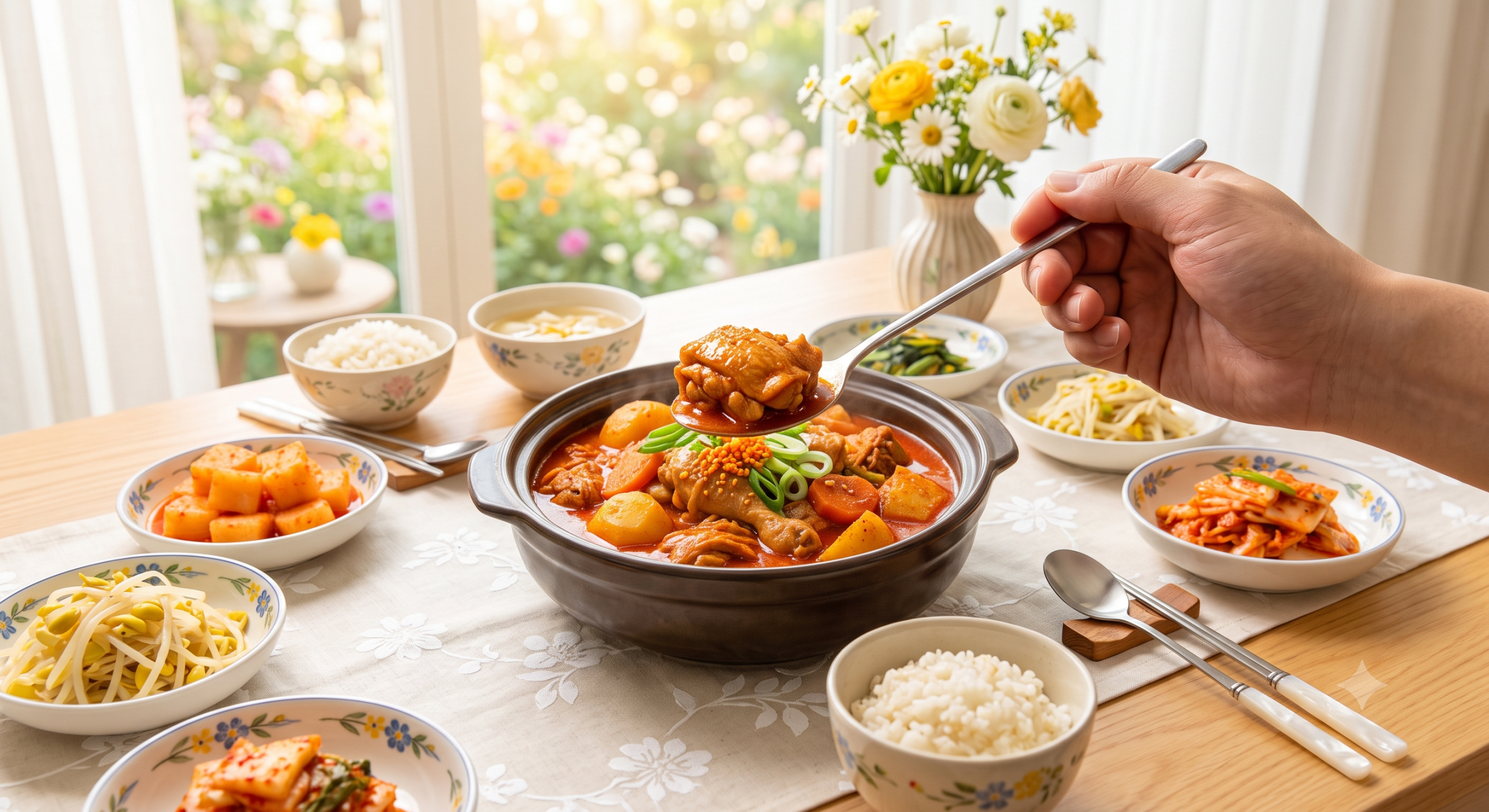
Authentic Korean Spicy Braised Chicken (Dakbokkeumtang): Hearty One-Pot Recipe
What is Dakbokkeumtang and Why Do Korean Families Love It?
Dakbokkeumtang (also known as Dakdoritang) is a beloved Korean braised chicken stew simmered in a bold, savory-sweet chili sauce with tender potatoes and vegetables. Whenever our family craves an energizing, fiery meal rather than a clear ginseng chicken soup (Samgyetang), this is the exact dish I cook. Now that my second child has grown older and handles chili spice comfortably, it has become one of our regular dinner staples. Even though we are a family of four, we cook a 2 to 3-serving portion because the real finale is mixing steamed rice directly into the remaining concentrated chili gravy—a single bowl of rice disappears in seconds!
What Ingredients Do You Need for Spicy Braised Chicken?
Main Ingredients (Serves 2–3):
- Chicken (Cut into bone-in pieces or boneless chunks): 600g (approx. 1.3 lbs, any cut of choice)
- Potato: 1 large (peeled and cut into hearty bite-sized chunks)
- Yellow Onion: 1 medium (sliced into chunks)
- Scallion (Green Onion): 1 large stalk (cut into 2-inch pieces)
- Water: 500 ml to 600 ml (approx. 2 to 2.5 cups)
- Cooking Oil: 0.5 to 1 tbsp (just a touch for searing)
Savory Chili Sauce Blend:
- Soy Sauce: 4 tbsp
- Korean Red Pepper Flakes (Gochugaru): 2 tbsp
- Sugar: 1.5 tbsp
- Korean Seasoned Ssamjang Paste: 0.5 tbsp (the secret savory rounder)
- Minced Garlic: 0.5 tbsp
- Fine Salt: 3 pinches
Easy Ingredient Substitutions for Shoppers
| Original Ingredient | North American Grocery Alternative | Where to Find & Notes |
| Korean Stewing Cut Chicken | Bone-in chicken thighs, drumsticks, or boneless skinless chicken thighs | Meat counter at Walmart, Kroger, Trader Joe’s, or Costco. Bone-in cuts yield a richer broth. |
| Korean Gochugaru (Chili Flakes) | Crushed red pepper flakes (pulsed in a blender) or mild chili powder | Standard spice aisle. Provides clean heat and vibrant red broth color. |
| Korean Ssamjang Paste | Mix 1/4 tbsp Miso paste + 1/4 tbsp Gochujang + tiny drop of maple syrup | Standard Asian aisle or easily whipped up with pantry staples. |
| Yukon Gold or Russet Potato | Russet, Idaho, or yellow cream potatoes | Standard produce aisle. Cut into large pieces so they do not dissolve while simmering. |
How Do You Cook Spicy Braised Chicken Step-by-Step?
Step 1: Prep Vegetables and Sauce
Cut the peeled potato, yellow onion, and green onion into uniform, bite-sized pieces. In a small bowl, whisk together 4 tablespoons of soy sauce, 2 tablespoons of Gochugaru, 1.5 tablespoons of sugar, 0.5 tablespoon of Ssamjang, 0.5 tablespoon of minced garlic, and 3 pinches of salt until thoroughly combined.
Step 2: Sear the Chicken and Aromatics
Heat a deep pot or wide braising pan over medium heat with a tiny swirl of cooking oil (about 0.5 to 1 tbsp). Add the chicken and sauté until the surface turns lightly golden and the meat is about halfway cooked. Add the minced garlic and sliced green onions to the sizzling pan, stirring for another minute until fragrant.
Step 3: Add Sauce, Pour Water, and Initial Boil
Pour the pre-mixed sauce over the seared chicken, tossing well so the meat is evenly coated in the seasoning. Pour in 500 ml to 600 ml of water, cover with a tight-fitting lid, and bring to a rolling boil over medium-high heat for 10 minutes to extract the savory chicken broth.
Step 4: Add Root Vegetables and Simmer Until Tender
Remove the lid and add the chunked potatoes and onions into the bubbling sauce. Reduce the heat to medium-low, cover partially, and let everything simmer until the potatoes are completely tender and fork-piercing soft, and the sauce thickens into a glossy, rich red glaze.
Pro Tips from Experience
- The 0.5-Tablespoon Ssamjang Game-Changer: While most recipes rely strictly on soy sauce and chili paste, stirring in just half a tablespoon of Ssamjang rounds out the sauce completely. The fermented soybean and garlic notes in Ssamjang deepen the body of the stew without requiring a pre-made bone broth.
- Sear the Chicken First Before Boiling: Never boil raw chicken directly in water. Sautéing the meat in a touch of oil until half-cooked caramelizes the surface fats, traps juices inside, and rids the chicken of any unpleasant odors before the braising sauce touches it.
- Stagger the Potatoes After 10 Minutes: Dropping potato chunks into the pot right at the beginning causes them to overcook, break apart, and turn your broth into a heavy, cloudy porridge. Letting the chicken simmer for 10 minutes first guarantees the chicken turns tender right as the potatoes reach fork-soft perfection.
- The Rice-Mixing Finale (Bokkeumbap Style): Do not discard a single drop of the leftover braised chili sauce. Once the chicken pieces and potatoes are finished, ladle warm steamed white rice directly into the remaining sauce in your bowl with a drizzle of toasted sesame oil and crushed toasted seaweed for the ultimate Korean family finish.
How to Store & Reheat Dakbokkeumtang
- Refrigeration & Deep Flavor: Store in an airtight container for up to 4 days. The chicken absorbs the savory, spicy braising sauce overnight, yielding even deeper flavor the next day.
- Freezing: You can freeze the chicken and sauce for up to 1 month. Note that potatoes and carrots will soften slightly upon thawing.
- Reheating: Simmer in a wide pot over low heat with the lid on, stirring occasionally from the bottom to prevent the starch-thickened sauce from scorching. Add 3 to 4 tablespoons of water if the sauce has become overly thick.
★ Do you need Soy Sauce Braised Chicken(Jjimdak) Recipe?
2 thoughts on “Dakbokkeumtang”