
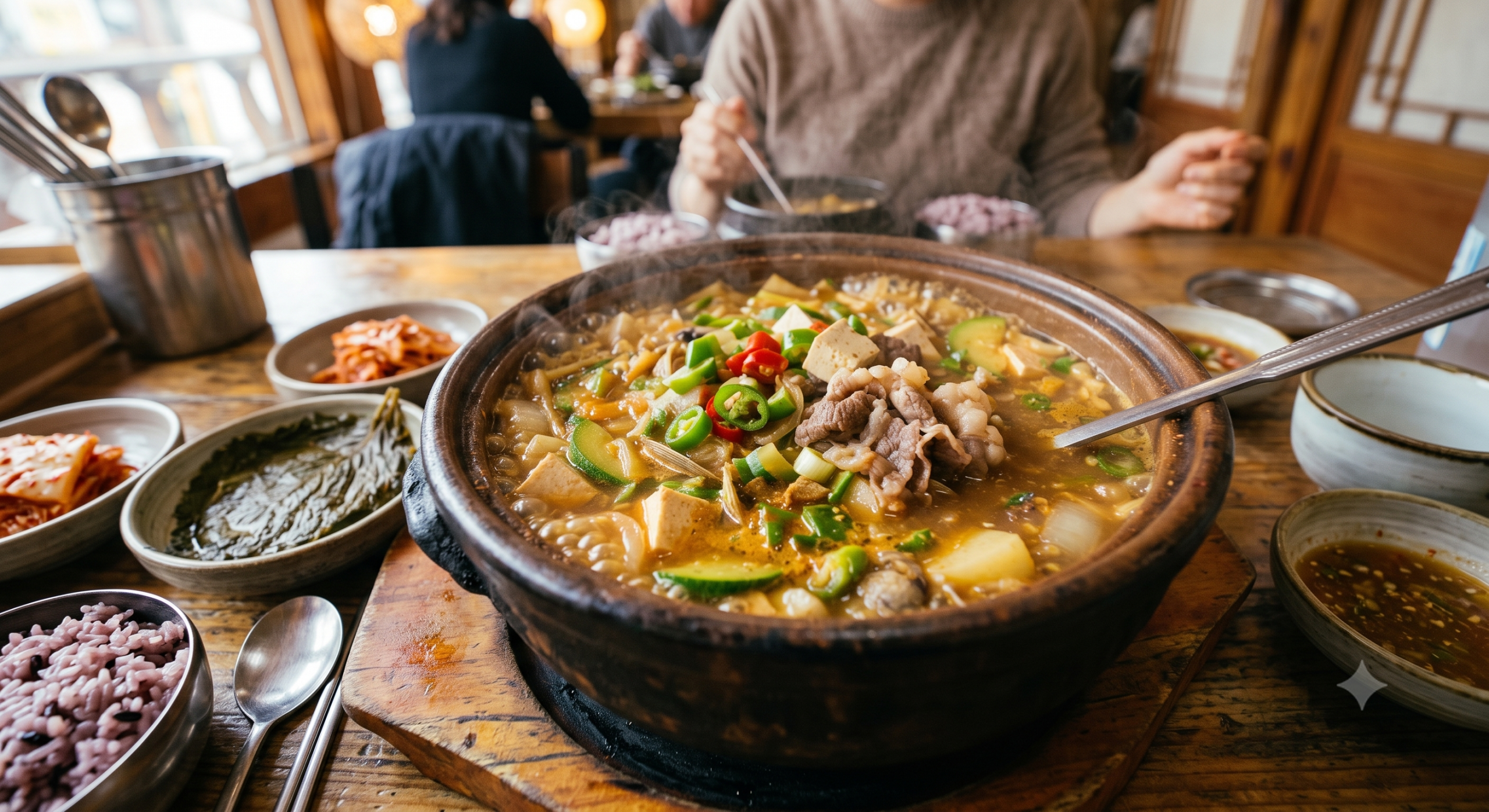
Authentic Korean Soybean Paste Stew (Doenjang Jjigae): The Ultimate Superfood Stew
What is Doenjang Jjigae and Why is it Considered a Korean Superfood?
Doenjang Jjigae is one of Korea’s most treasured daily stews, made by simmering deeply savory fermented soybean paste (Doenjang) with fresh vegetables, hearty tofu, and tender cuts of meat. Often celebrated as a bona fide superfood, traditionally fermented soybean paste is rich in bioactive isoflavones and probiotics known in Korea for their potent anticancer and immune-boosting properties. Ever since my kids were little, I made a warm pot of this stew for them, and they still love nothing more than spooning the rich broth and vegetables over bowls of steaming white rice.
What Ingredients Do You Need for Authentic Doenjang Jjigae?
Vegetables & Aromatics:
- Yellow Onion: 1 medium
- Potato: 1 medium
- Scallion (Green Onion): 1 large stalk
- Korean Zucchini (Aehobak): 1/3 medium
- Medium-Firm or Soft Tofu: 1 standard block (approx. 300g to 340g)
- Water: 700 ml to 800 ml (approx. 3 to 3.5 cups)
Protein Choice (Select One):
- Pork Stew Meat (Pork shoulder, belly, or collar): 200g – 300g (approx. 0.45 – 0.66 lbs)
- Beef Brisket (Chadolbaegi / thinly shaved brisket): 200g – 300g
Stew Seasonings & Base Paste:
- Korean Fermented Soybean Paste (Doenjang): 3 tbsp
- Korean Seasoned Ssamjang Paste: 1 tbsp (the secret savory rounder)
- Minced Garlic: 1 tbsp
- Fine Salt: 1/2 tbsp
- White Vinegar: 1 tbsp (the secret brightness enhancer)
Easy Ingredient Substitutions for Shoppers
| Original Ingredient | North American Grocery Alternative | Where to Find & Notes |
| Korean Doenjang | Japanese Red Miso (Aka Miso) or Brown Miso | Asian aisle at Walmart, Kroger, Whole Foods, or Trader Joe’s. Use slightly less salt as miso varies in salinity. |
| Korean Ssamjang | Mix 1/2 tbsp Doenjang (or Miso) + 1/2 tbsp Gochujang + pinch of honey | Readily made with standard pantry staples if pre-made Ssamjang tubs are unavailable. |
| Korean Zucchini (Aehobak) | Standard green zucchini or yellow summer squash | Standard produce section. Slice into thick half-moons so it holds its shape during boiling. |
| Beef Brisket (Chadolbaegi) | Shaved ribeye (Philly cheesesteak meat) or diced boneless pork chops | Meat department at any standard supermarket or local butcher counter. |
How Do You Cook Korean Doenjang Jjigae Step-by-Step?
Step 1: Chop the Fresh Ingredients
Rinse and dry all produce thoroughly. Cut the yellow onion, peeled potato, zucchini, green onions, and tofu into uniform, bite-sized cubes or half-moons. Keep the tofu cubes set aside on a plate for the final simmer.
Step 2: Build the Vegetable Base Broth
Pour the water into a medium pot or Korean earthenware bowl (ttukbaegi). Add the chopped onion, potato, green onion, and zucchini into the cold water right away. Bring the pot to a rolling boil over medium-high heat so the root vegetables begin releasing their natural sweetness into the broth.
Step 3: Dissolve the Seasoning Pastes
Once the broth reaches a rapid boil, stir in 3 tablespoons of Doenjang and 1 tablespoon of Ssamjang using a spoon or a small mesh strainer to ensure the thick paste dissolves smoothly without clumps. Add 1 tablespoon of minced garlic, 1/2 tablespoon of salt, and 1 tablespoon of vinegar, stirring thoroughly to blend the flavors.
Step 4: Add Tofu, Meat, and Simmer to Finish
Let the broth boil for 5 minutes so the potatoes soften. Gently drop in the sliced meat (pork or thinly shaved beef brisket) and the cubed tofu. Reduce the stove to medium-low heat and let the stew simmer gently for 10 more minutes until the meat is thoroughly cooked, the tofu absorbs the savory bean broth, and the soup thickens into a rich, comforting glaze.
Pro Tips from Experience
- The 1-Tablespoon Ssamjang Shortcut: While traditional recipes rely solely on rustic soybean paste, adding a single tablespoon of seasoned Ssamjang instantly rounds out the broth. It introduces subtle toasted sesame oil, garlic, and sweet onion notes that replicate the signature flavor of high-end Korean barbecue restaurants.
- Why the Splash of Vinegar Works: Adding 1 tablespoon of white vinegar does not make the stew sour. Instead, the mild acidity cuts right through the funk of fermented soybeans and the heaviness of pork or brisket fats, brightening the overall profile and making it exceptionally approachable for children.
- Cold-Start Root Vegetables: Always place firm vegetables like potatoes into cold water before turning on the flame. Heating them up gradually extracts more vegetable sugars into the soup liquid while ensuring the centers cook through evenly without splitting apart.
- Add Tofu and Meat Last: Soft tofu breaks into tiny, mushy pieces if boiled too aggressively from the start. Adding both the meat and tofu in the final 10 minutes keeps the pork tender and juicy (or prevents beef brisket from turning tough and rubbery) while preserving clean, intact tofu cubes.
How to Store & Reheat Doenjang Jjigae
- Refrigeration: Cool to room temperature and transfer into an airtight glass container (fermented soybean paste can permanently stain plastic containers). Keep refrigerated for up to 3 to 4 days.
- Reheating Tip: Reheat on the stovetop over medium heat until simmering. Because doenjang tastes slightly saltier as the broth reduces, add 2 to 3 tablespoons of water or kelp broth to balance the salinity. Add freshly sliced scallions or fresh chili peppers right before turning off the heat for a fresh aroma.
★Do you need Kimchi Jjigae recipe?
1 thought on “Doenjang Jjigae”