
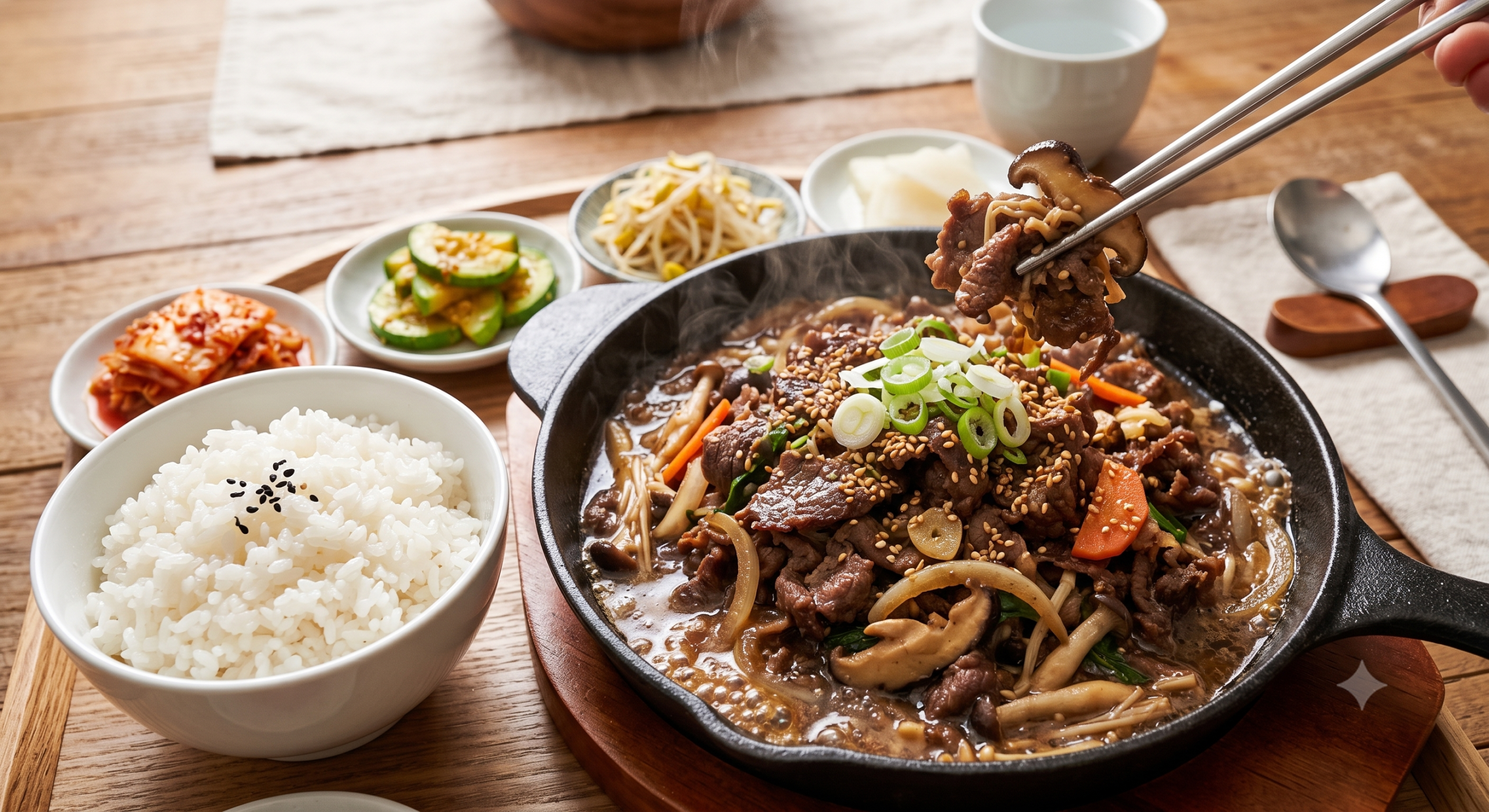
Restaurant-Quality Korean Beef Bulgogi: Authentic Tender Marinated Beef Recipe
What is Korean Bulgogi and Why Does Everyone Love It?
Bulgogi, literally translating to “fire meat,” is one of Korea’s most universally celebrated culinary treasures, made of paper-thin slices of beef marinated in a deeply savory, aromatic soy glaze. Served sizzling hot over steaming white rice, it balances rich umami, garlic warmth, and subtle fruity sweetness that reliably clears dinner plates. Whenever I make bulgogi with this recipe, my family clears their plates completely. Shall we get started?
What Ingredients Do You Need for Restaurant-Style Beef Bulgogi?
Main Ingredients (Serves 4–5):
- Beef (Bulgogi Cut / Thinly Sliced Ribeye, Top Sirloin, or Chuck Eye): 600g to 800g (approx. 1.3 to 1.7 lbs)
- Yellow Onion: 1 medium
- Scallion (Green Onion): 1 large stalk
- Carrot: 1/4 medium
- Mushrooms (King Oyster, Shiitake, or White Button): 2 medium
- Cooking Oil: 1 to 2 tbsp (for pan-searing)
The Secret Restaurant Marinade:
- Soy Sauce: 10 tbsp
- Korean Crushed Pear Drink (Bae Juice / IdH): 200 ml (approx. 0.85 cup / 1 small can)
- Granulated Sugar: 2 tbsp
- White Vinegar: 2 tbsp (the secret balancing tenderizer)
- Minced Garlic: 1 tbsp
- Fine Salt: 1/2 tbsp
- Toasted Sesame Oil: 3 tbsp (for finishing)
- Toasted Sesame Seeds: 1 tbsp (for finishing)
Easy Ingredient Substitutions for US & Canada Shoppers
| Original Ingredient | North American Grocery Alternative | Where to Find & Notes |
| Bulgogi Thinly Sliced Beef | Shaved ribeye (Philly cheesesteak cut) or thinly sliced beef carpaccio | Standard meat counter at Costco, Kroger, Trader Joe’s, or local butcher. Ask the butcher for paper-thin slices. |
| Korean Pear Drink (IdH) | Apple juice, sweet apple cider, or pureed Bosc/Bartlett pear | Standard juice aisle. Sweet apple juice perfectly replicates the natural fruit enzymes. |
| King Oyster Mushroom | White button mushrooms, Cremini (baby bella), or sliced portobello | Standard produce department in any grocery store. |
| Toasted Sesame Oil | Standard toasted Asian sesame oil (Kadoya or store brand) | International or Asian aisle at Walmart, Target, and Safeway. |
How Do You Cook Restaurant-Style Bulgogi Step-by-Step?
Step 1: Prep the Vegetables
Slice the yellow onion into 0.5 cm half-moons. Cut the green onion diagonally into 2-inch lengths. Thinly julienne the 1/4 carrot and slice the mushrooms into uniform, bite-sized strips so they cook evenly with the beef.
Step 2: Marinate the Sliced Beef
Place the thinly sliced beef into a large mixing bowl. Pour in the soy sauce, Korean pear drink, sugar, vinegar, minced garlic, and fine salt. Massage the marinade into the meat by hand for 1 to 2 minutes, ensuring each ribbon of beef is fully separated and coated. Let the meat rest and tenderize at room temperature for at least 20 minutes (or in the fridge for up to 2 hours).
Step 3: Sear the Meat First
Heat a wide skillet or wok over medium-high heat and swirl in 1 to 2 tablespoons of cooking oil. Add the marinated beef without crowding the pan too heavily, letting the high heat quickly sear the outside. Cook until the beef is about halfway done, releasing its rich juices into the pan.
Step 4: Add Vegetables and Finish with Aromatics
Toss in the sliced onion, scallions, carrots, and mushrooms. Stir-fry everything together over medium-high heat until the vegetables soften and absorb the savory glaze, and the meat is completely cooked through. Turn off the heat, drizzle with 3 tablespoons of toasted sesame oil, sprinkle with toasted sesame seeds, and toss once before serving.
Pro Tips from Experience
- The Canned Korean Pear Drink Shortcut: Authentic restaurants traditionally puree whole Korean pears (Bae) to naturally tenderize tough meat fibers with calpain enzymes. Using a 200 ml can of Korean pear drink provides that exact enzyme breakdown and clean, delicate sweetness without the hassle of grating whole fruit.
- The 2-Tablespoon Vinegar Secret: Adding 2 tablespoons of vinegar might seem unusual for bulgogi, but it does not make the dish sour. Instead, the mild acid tenderizes the beef fibers rapidly and cuts through the heavy soy-sugar sweetness, replicating the vibrant, non-greasy glaze of top Korean barbecue houses.
- The 20-Minute Minimum Marinating Window: Because bulgogi meat is sliced paper-thin, you do not need to marinate it overnight. A quick 20-minute rest at room temperature allows the soy sauce, pear sugars, and garlic to penetrate deep into the meat cells while preventing the delicate beef from turning mushy.
- Sear Meat First, Vegetables Second: Never dump the cold raw vegetables and cold marinated meat into the pan together. Cooking the beef halfway first allows the meat to caramelize properly; adding the vegetables toward the end keeps the onions sweet and the mushrooms firm rather than limp and watery.
How to Store & Reheat Bulgogi
- Raw vs. Cooked Storage: Marinated raw beef can stay in the fridge for up to 48 hours or portioned into freezer bags and frozen for up to 3 months. Cooked leftover bulgogi lasts 3 to 4 days in the refrigerator.
- Reheating Without Drying Out: Cooked beef dries out easily when reheated. Warm it gently in a non-stick skillet over medium-low heat with 1 to 2 tablespoons of water or residual sauce, covering with a lid to trap steam. If using a microwave, cover the dish with a damp paper towel and heat on 70% power in 45-second intervals.
★Are you looking for dishes to pair with bulgogi? Then check out my Gajijeon Recipe as well!
1 thought on “Korean Bulgogi”